X
TOP



Book a Room
Hotel Indigo Rome – St. George is a 5 star luxury boutique hotel characterized by a fascinating and full of history atmosphere where the ancient walls surround a contemporary design. The interiors and the modern furniture perfectly blend with architectural elements which are the testimonies of a glorious past: the large travertine marble stones at the base of the facade, which recall the shape of modern sofas, the unmistakable style of the Renaissance buildings, the succession of elegantly discreet spaces divided by arches and the original ancient walls are only a few examples that distinguish this one of a kind 5 star luxury boutique hotel in heart of the city.
Roof Terrace with spectacular view of the city centre
Having the chance to admire Rome from the top is definitely one of the most suggestive emotion: its roofs, terraces, domes and its magnificent monuments remind of an ancient past of Caput Mundi. On the top floor of the hotel, the Roof Terrace is the perfect spot to contemplate a sunset with a 360° view of the Eternal City. Whether it's the early hours of the morning, a sunset or a starry night you can create your own personal collection of postcards.
Hotel Indigo Rome – St. George is a 5 star luxury boutique hotel characterized by a fascinating and full of history atmosphere where the ancient walls surround a contemporary design. The interiors and the modern furniture perfectly blend with architectural elements which are the testimonies of a glorious past: the large travertine marble stones at the base of the facade, which recall the shape of modern sofas, the unmistakable style of the Renaissance buildings, the succession of elegantly discreet spaces divided by arches and the original ancient walls are only a few examples that distinguish this one of a kind 5 star luxury boutique hotel in heart of the city.
Roof Terrace with spectacular view of the city centre
Having the chance to admire Rome from the top is definitely one of the most suggestive emotion: its roofs, terraces, domes and its magnificent monuments remind of an ancient past of Caput Mundi. On the top floor of the hotel, the Roof Terrace is the perfect spot to contemplate a sunset with a 360° view of the Eternal City. Whether it's the early hours of the morning, a sunset or a starry night you can create your own personal collection of postcards.
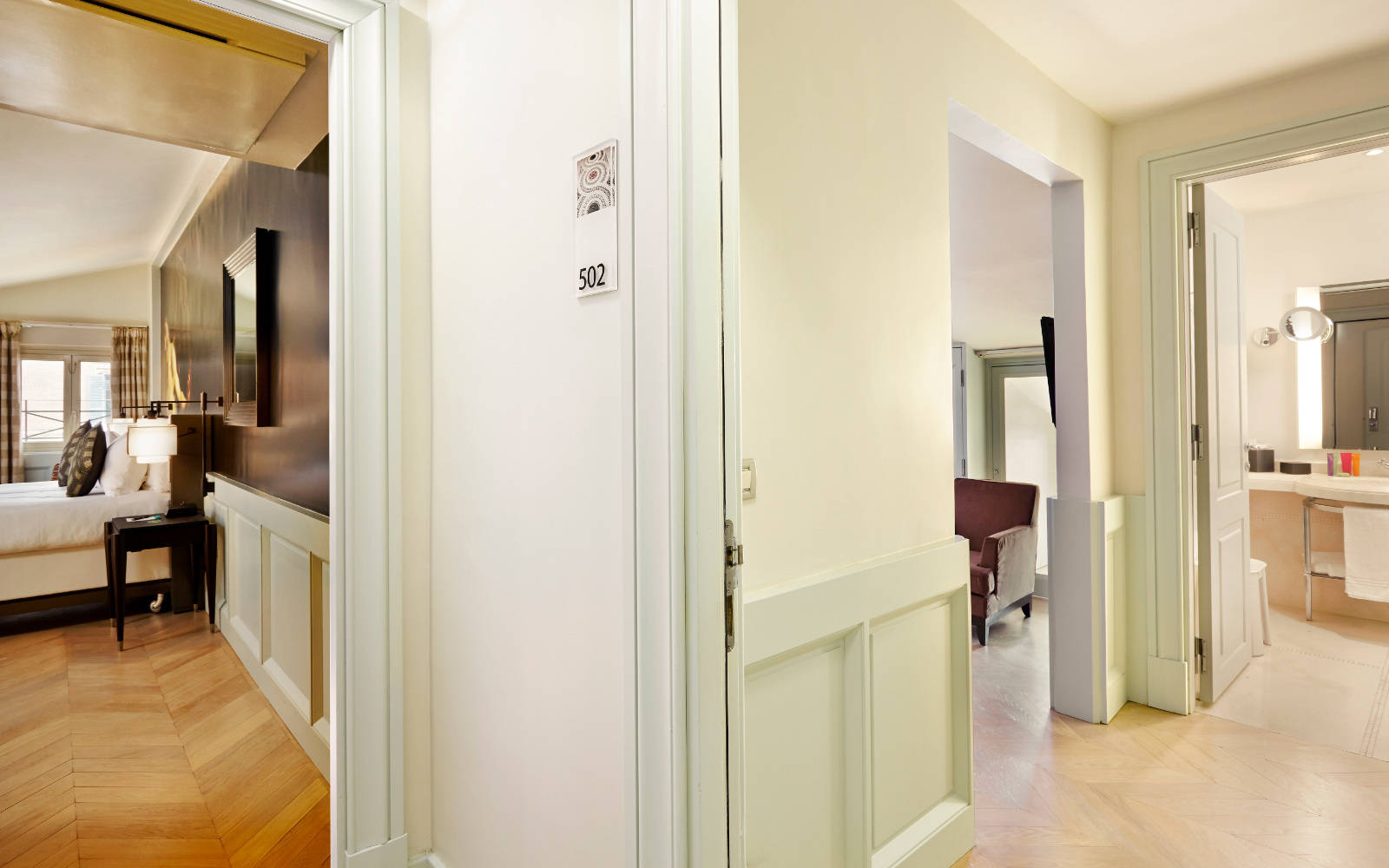
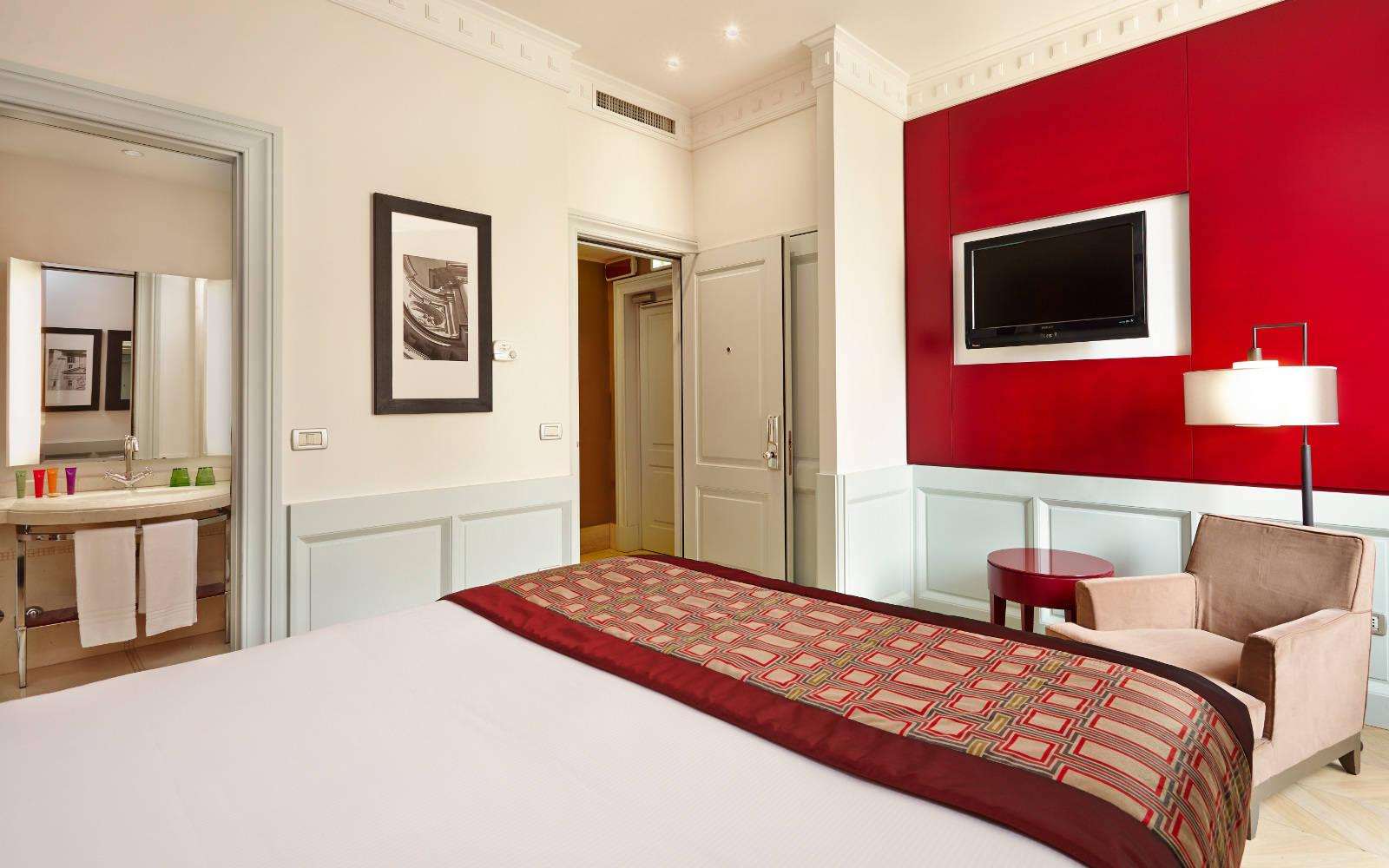
The hotel offers 62 elegant and modern rooms among Standard, Premium, Junior Suite, Executive Suite and Family Deluxe.
Each room type has its own character and strong personality, inspired to the greatness of the Roman history and the Italian creativity through the centuries. From the masterpieces by Bramante and Caravaggio to the legendary FIAT 500, an icon of the ‘60s.
Each room type has its own character and strong personality, inspired to the greatness of the Roman history and the Italian creativity through the centuries. From the masterpieces by Bramante and Caravaggio to the legendary FIAT 500, an icon of the ‘60s.


Housed by the Hotel Indigo Rome - St. George, a 5 star luxury boutique hotel in the of Rome's city centre, I Sofà Bar Restaurant & Roof Terrace is a contemporary design location where modern details and vibrant colors perfectly blend with the architectural elements of the past.
From early morning it will be possible to enjoy breakfast in an elegant and relaxing environment. From 12pm till midnight snacks will be served at the bar. And at dinner it will be possible to taste a menu dedicated to the excellence of the territory.
During the summer season, the bar moves up to our Roof Terrace and the restaurant moves to the internal courtyard, weather permitting.
From early morning it will be possible to enjoy breakfast in an elegant and relaxing environment. From 12pm till midnight snacks will be served at the bar. And at dinner it will be possible to taste a menu dedicated to the excellence of the territory.
During the summer season, the bar moves up to our Roof Terrace and the restaurant moves to the internal courtyard, weather permitting.


Access to the St. George Spa, which includes the Roman Bath with hydromassage tubs, sauna and Turkish bath, and mini-gym, is complimentary for all hotel guests.
Soft lighting, enveloping scents, and refined touches create an atmosphere of harmony and balance—perfect for unwinding after a full day exploring Rome.
Customized beauty treatments and a wide selection of massages complete the wellness offering.